I moved out of New York City more than 40 years ago. Yet, in my upcoming collection of short stories, 5 of the 14 are fully set in New York, and another 4 have back story that involves New York. In contrast, only one story is centered in western Massachusetts, where I’ve lived for most of my adult life.
This may not be significant. After all, I know many writers who prefer to write about fantasy worlds, and while I’m more of a realist, I’ve occasionally set fiction in places I haven’t lived or spent significant amounts of time. One could argue that I’ve taken the easy way out since I’m so familiar with New York geography and culture. But at this point in my life, I’m just as familiar (if not more familiar) with my area of New England.
Yet, while I feel gratitude every day for finding my little corner of paradise in western Massachusetts, it just doesn’t speak to me with the same verve and intensity as the place I spent my childhood and came of age as a young twenty-something. Perhaps because New York, for me, is the place of unfinished business. It’s impossible for me to think of my early life without the heavy layer of a nearly treeless concrete landscape infused with litter and noise, a place where I was taught early on to assume anyone I didn’t know was a likely threat to my physical safety. But these weighty aspects were balanced with ongoing excitement, a pulse of discovery of art, music, theater, poetry, and a melange of multicultural experiences that dominated my life from the time I became a teenager and was able to go to museums and shows and restaurants with my friends. The city was my personal playground, and there was always something new to taste, or feast my eyes and ears on.
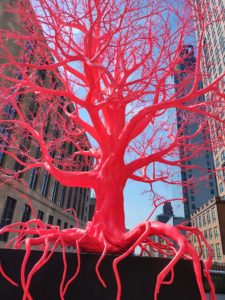
Sculpture on the High Line
Last weekend, my husband (whom I met at a poetry reading at a 5th floor walk-up in Greenwich Village) and I took my visiting niece and her husband on a walking jaunt through Brooklyn. As we navigated the crowds on the Brooklyn Bridge, my husband recounted the time some crazy friend of his decided to climb up on the cables to hang a political banner.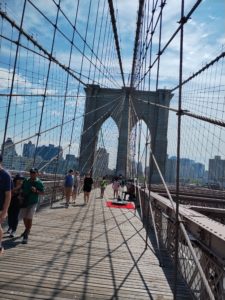
On the promenade I remembered going to see the fireworks, and how the cars on the expressway below came to a complete standstill to watch, then honked as if their lives were at stake a millisecond after the last blast. As we continued to walk to Prospect Park, we made sure to point out the general direction of the building I worked at when I was a VISTA volunteer in Brooklyn helping people deal with utility shut-offs, and the dumpy apartments we lived in when we first started dating. These weren’t the landmarks you’d find on the Michelin tour, but they are the stuff of scene–salient moments and memories of places from your (or your characters’) pasts.
There’s a scene in the movie, My Dinner with Andre, in which after listening to Andre bash New York in an endless dinner conversation, Wally takes a cab home through the city and notices that on every block he passes a place that he feels deeply connected to. That’s how I feel about New York, even after all these years away. You can take me out of New York, but you can’t take New York out of me.
And this is a good question to think about when developing fictional characters. What places do they care about and why? How has where they’ve grown up affected the way they interact with the world around them?
Perhaps I did take an easy way out in setting so much of my book in New York. I understand New York mindset and mentality, and I could bring up the flavor of neighborhoods and streets through personal experience, rather than having to do a lot of research. But I didn’t make that choice consciously, or for that reason. I’m still resolving the contradictions and ambiguities in my own “love-hate,” relationship with the city by zeroing in on how the city affects others, even if these others are creatures of my imagination.
To subscribe to this blog, sign up at ddinafriedman.substack.com
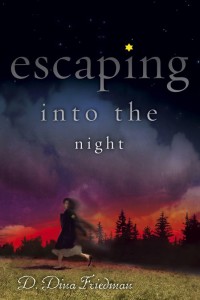
 There’s an old adage… you can’t judge a book by its cover, meaning (according to the
  but I never liked the cover for my second book, Playing Dad’s Song.
 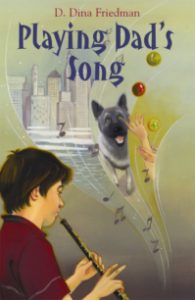 It wasn’t much consolation that the book with the cover I liked did way better than the book with the cover I didn’t like. I couldn’t help but wonder and wish that a stronger cover would have made a difference with this book’s performance in the market.
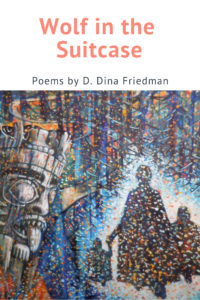 Since poetry is tough to sell to people who don’t know you, I didn’t really think too much about market impacts, though I hoped the bright and engaging colors would evoke interest.


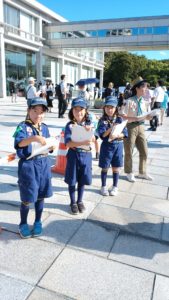 And the security people who searched bags in the extremely orderly array of lines were efficient and respectful as they handed people shrink-wrapped cooling towels, which seem to be a staple in the “wicked hot” Japanese summer–consistent temperatures in the 90s that feel even hotter due to the high humidity.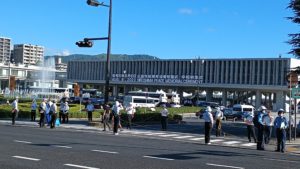

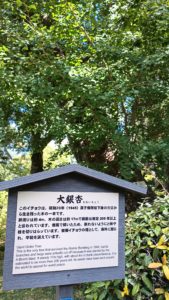 The day before, we had gone to the city gardens and seen a large ginkgo, one of only three trees that survived the bombing. We also went to the Peace Museum and barely made it through picture after picture of burnt bodies, story after story of people wracked with despair as they stumbled through rubbled streets, trying to find their loved ones. This was made even worse by the short political exhibit that followed, which emphasized how the U.S. felt it was “worth it” to drop this new weapon on already nearly defeated Japan if it would keep the Soviet Union from entering the war and sharing the spoils.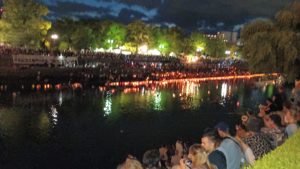
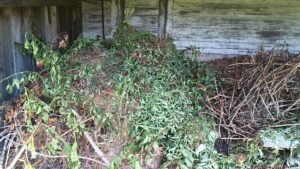
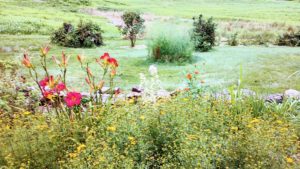 Of course, I’m not a bad person, even if I return to find my walkway a snarling mess. Nevertheless, I felt deluged with shame last year when I had to admit defeat with the driveway and call for professional help–the same kind of shame I felt when I first returned to playing the piano and couldn’t get through any of the pieces I wanted to play without a million mistakes. But somewhere in the past three years with piano, in addition to acquiring more dexterity through frequent practicing, I’ve learned to laugh when I mess up, then patiently go over the tricky passages. And then, even if I still can’t play the hard parts perfectly, I tell myself I’ve done well enough for today. And that playing the piece still brought me joy. Like my flower garden, which is NEVER weed-free, but still a pleasing, cultivated chaos.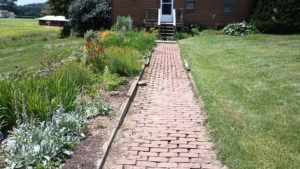
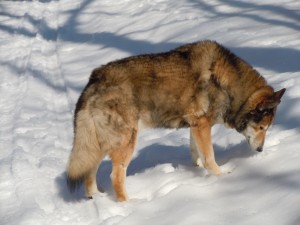 One of my favorite suggestions (and a practice I already regularly engage in) is walking in nature. I learned this from my husky-shepherd, Lefty, who quickly made it clear that the key to keeping him calm was a long off-leash walk in the woods every day. I found this break so nourishing, I’ve continued the practice. Even though he’s been gone for 12 years, I make a point of walking daily in all kinds of weather. And when I need an extra nudge to get my tired or tense torso out the door, I channel the ghost of my four-legged personal trainer, remembering that even at the very end of his life, he’d battle his own demons of arthritis, fatigue and lethargy for the joy of being in the woods.