Labyrinth

I was planning to blog about tackling Bruch’s Kol Nidre last week, a piano/cello duet centered on the prayer that opens the Jewish Holiday of Yom Kippur. And then I realized I wrote a piece about this very topic three years ago.

This shouldn’t have been surprising, since every year I tend to drag this piece out of my small collection of sheet music to help me connect to the holidays. I am ambivalent about many aspects of traditional Jewish practice but I absolutely love this piece of music, even as I’m still struggling to play it at a level anywhere near my bar of satisfaction.
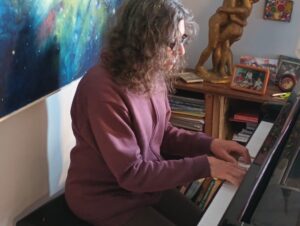
I was surprised when I read my previous post that I described my experience as mostly positive. But perhaps that was because I gave myself more time to dig into it. This year, I didn’t bring out the piece until a week before the holiday, thinking that the arrangement I found on-line, which was solely for piano rather than piano/cello, would be easy enough to re-learn quickly with all those extra years of practice and so much prior familiarity. I don’t know whom I was kidding. What I will confess is that after three days of what felt like torturing myself, I gave up.

Too late to learn this in time for Yom Kippur. Next year I’ll start a month ahead.

Or maybe three months ahead.

Or maybe on Passover.

But what did impress me, and what was different was that I didn’t mentally beat myself up for throwing in the towel, as I might have in previous years. I didn’t unleash the litany of my self-critic, Eloise, nagging on about what a terrible musician I was: yada, yada, yada. I just said to myself, I don’t have the capacity to learn this right now, and put the pages aside.

And on Yom Kippur eve, the only time I go to services outside of b-mitzvahs or my mother requesting my yearly witness for reading the Torah, I went to my local synagogue and heard two high school students, Ben and Amita, play this piece with effortless elegance and grace. This is a wicked hard piece of music (at least, in my humble opinion) but their performance did not center on virtuosity. In fact, I wouldn’t even call it a performance; they just played from the heart.

In one of the Jewish practices I’ve become attached to, taking the entire month before the New Year (Elul) to work in tandem with a chevruta (spiritual friend) to reflect on our life and contemplate renewal for the new year, we’ve talked about the notion of a labyrinth–how each year, it can feel frustrating to be confronting the same issues; yet, we’re still going slowly forward and around, so that we’re not stuck in the same place. We’re facing them from a different point in the circle. So here I am writing about playing Kol Nidre again–but from a different point on the labyrinth. And while next year, I might dream of playing this piece with half the fluidity of Ben and Amita, that probably isn’t going to happen. Even if I decide to start re-learning it tomorrow and make it a year-long project.

Yet, whether I’m curious to see what will happen and where I’ll be on the labyrinth next year. Maybe, I won’t even want to challenge myself with this hard piece of music. Maybe I’ll suddenly become enamored with tap dancing or bungee jumping. Or maybe I’ll decide my true calling is improvising my own musical melodies. Or maybe I will dig in early enough to see what learning it can teach me. In any of these cases, I’ll be learning something about myself, ideally with a focus on the newness of the moment, rather than on all the past baggage.

And if we think of any moment as a brand new opportunity, what a wealth of possibilities that could bring to healing–not only ourselves, but to the many troubles experienced today in the world.

Shana Tovah!

Subscribe at https://ddinafriedman.substack.com
 

What’s in a Name

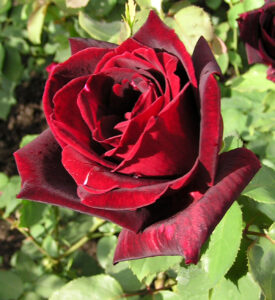
https://commons.wikimedia.org/wiki/ File:Rose_Papa_Meilland.jpg


Thirty-four years ago, on Rosh Hashanah, I stood on the banks of the Connecticut River and ceremoniously, with the help of my chavurah, changed my name to Dina, a name I have now had for nearly half my life.

I’d been playing with the name change for about a year. My birth name, Deborah, never felt like it fit me. In fact, the only people who ever called me Deborah were my mother when she was angry at me, and a third grade teacher I didn’t like. Debbie, the diminutive I did identify with, was beginning to feel more and more childish, but shortening it to the more adult, “Deb” always felt like something was cut off, or like the name of a sports jock, not a poet.

Another reason I made the switch: there were so many Debbies in my life, I felt boxed in by the herd. Two of my close friends growing up were also named Debbie. And I can’t even count the number of times, I’d call a schoolmate. This is Debbie, I would say. And they would say, Which one? Which made me feel so anonymous and inconsequential. To make things even worse, there was an up and coming folksinger named Debbie Friedman, and a few people thought it was me. I didn’t know you sang, they said. Since one of my secret ambitions had always been to be a folksinger, I was miffed that this other Debbie Friedman had made the cut when I hadn’t.

So it was definitely time to break out of the box and become my own person.

I chose Dina because I wanted to stick with a D-name that sounded Jewish and was easy to pronounce. I also wanted it to be different, but not too different–just a little off the beaten track. While transitioning into the change I wrote my name as Debbie Dina Friedman, which I then changed to D. Dina Friedman on the official state documents a few months after that Rosh Hashanah ritual, paying the 60 bucks and being officially done with my birth name.

If I could do it again, I’d dump the initial D in front. I still like it, but it creates a lot of unnecessary bureaucratic hassles, similar to those my partner and I saddled our kids with when we gave them a double unhyphenated last name. But other than that, I’ve been very happy with the name change, which helped me open to seeing myself in a new way. And I was grateful to the many family members and friends who gracefully transitioned to calling me by the name I wished to call myself.

My parents, however, were hurt by my rejection of the name they chose for me, and continued to call me by my birth name. Being a parent myself, I understood their unhappiness, but ultimately, this should be just one more step in parenting’s continuous process of letting go. My father, to his credit, would call me Dina when my mother wasn’t listening, but I could tell he struggled to do it. My mother, to her credit, addresses envelopes to Dina (or usually just D.–I guess that was the reason I kept the D. before Dina) but still continues to call me by my birth name.

As my family sat around the table this Rosh Hashanah, our conversation suddenly turned to road apps–how to find a decent one that did not succumb to the arbitrary renaming of Lake Ontario. While I do believe, as Shakespeare said, that a rose by any other name would smell as sweet and that we have the absolute right to change our own names, we do not have the right to unilaterally change the names of things around us, especially when there are others involved with equal stakes in the outcome.

Fantasizing is fun when you’re three or four. My grandson erupts into laughter if all of a sudden he’s Grandma and I’m Manu, or if both of our names are Poop and his preschool teacher is Miss Poopy. But at some point, we need to grow up and face the fact that renaming a body of water, or plastering your own name on an arts center dedicated as a memorial to a much better person than you does not change the hard reality of who you are. Even when I became Dina, I didn’t magically morph into the wiser, cooler me I might have wished to become. (And I didn’t become a folksinger, either.) I was still me with all my quirks and flaws, though perhaps with a little less self-limiting baggage, and a clearer vision of who I could be if I worked for it. But that’s the operating word: working for it.

Subscribe at https://ddinafriedman.substack.com


Shouting into the Void

True confessions: I subscribe to far more Substacks, blogs, writing sites, daily poems, daily prompts, magazines, news reports, activist mailing lists, and social media groups, than I can possibly keep up with.

So my day begins with a delicate dance of choosing what to read and what to ignore. Actually, I’ve revised my habits so my day begins with a brief meditation followed by 30 minutes of exercise before I even look at the onslaught of text in my email box, but once I’ve opened the lid on my laptop, the rush is on. So many little tentacles of info competing for my attention, and all of them are just a small slice of the wider pie of projects and activities I’ve committed to, not to mention the obligations of maintaining my home, nurturing my family, and being a good friend to the many people who matter to me.

Somehow, I don’t think this issue is uniquely my problem. Likely, many of us are swamped by the competition between our life’s obligations and our desires for how we might want to spend our time. Being rained on by torrents of electronic words only adds to the flood.

So, I get it when I write a blog post and there are absolutely no reactions. But it’s still an eerie feeling–like shouting into the void.

Artist: Sam White; retrieved from newgrounds.com

Does *anybody* hear me? Does *anyone* think what I’m writing is worth listening to? 

Absolutely not, says my inner critic, whom I’ve decided to name Eloise. No one cares about your stupid weekly dribbles.

Should I stop blogging? It could be a relief to take one more thing off my to-do list! 

My initial reason for starting a blog was to do what all authors are told they need to do. The goal–stated by every marketing workshop I attended and every resource I read was to build a platform by acquiring a large degree of subscribers. That never happened, and as I’m not generally someone who plays the long-term patience game, I could have quit after the first year, when my most recent books were considered old news anyway. But the surprising thing was that I found I really liked blogging. Taking the time to think about some tidbit from my life or the wider world and its relationship to the themes I’m passionate about–creative expression and social change–has been invigorating. And trying to encapsulate that thought into a short 500-800 word post has been a formidable and stimulating writing challenge.

Besides, Substack continues to seduce me with a challenge of how many weeks in a row I can post a blog. And this is something I can control, even if I can’t control the number of people in my subscriber base.

What’s also satisfying is the feeling that I’m not just spouting words on paper to an amorphous audience. I’m writing to a bunch of friends, as most of my subscribers are people I know. (And I’d love to meet the rest of you!) Because of that, I’m determined to stay authentically myself and not hide behind some ostensibly wiser but more distant “author mask.” And it tickles me thinking that if you’re able to take some of your very precious time to read some of these musings, it might lead to more connection between us. If you react, or comment, or let me know in some way, then I can feel more connected, too.

Which is why the posts with no reactions at all leave me a bit lonely and off-kilter. But seriously, no shade! I wish I could read every Substack post from every single friend I subscribe to, and I can’t. Though I do try to prioritize reading posts written by friends so that I can get to at least some of them some of the time. And I’m going to make it a point to react more, because I often read and don’t react–out of busyness, or laziness, and now I’m realizing how great it would be if if the void I’m shouting into could echo back. Yes! I hear you!

Subscribe at https://ddinafriedman.substack.com


Kale, Mindfulness, and a Smoothie Recipe

Mercury is not currently in retrograde, but earlier this week, there was a 24-hour time period when I was convinced that supernatural forces were taunting me with one of my biggest pet peeves: wasted time.

It all started with the kale, which I’d been eyeing in the garden as it grew bigger and shaggier every day. I knew I should harvest it, but there were so many more perishable things to attend to: cherry tomatoes to pick, cucumbers and zucchini that were still holding on, larger heirloom tomatoes finally ripening, peppers, eggplant, the first blush of fall raspberries, grapes. The kale can wait, I kept telling myself. It’s hearty, and there are so many other things I need to cook and eat.

But last Monday, despite two time-consuming Zoom meetings and a bunch of activism homework, I looked at the yellowing lower leaves and decided the kale really shouldn’t wait any longer. I gave all six plants a severe haircut, gathering the leaves in a large plastic bag. Way too much to eat before it went bad, the only option was to freeze it for soup and smoothies. So I set about the process, which involved washing, chopping, and rewashing two colanders full, plunging them first into boiling water, and then into a large pot of ice water–a chore in itself to make room for in the fridge. Afterwards I gave my hands a workout squeezing the chopped kale into little balls, which I prepared to freeze on a cookie sheet before transferring them into freezer bags.

It took me an hour to wash and chop the first batch, which I did sometime midday, and then it took until mid-evening before I got back to the project–the boiling, cooling, ball formation, and then a repeat for the second batch. It was about 10:30 pm, and I was almost done when I saw it in my hands among the kale shards.

A little worm.

I’ve been gardening long enough that one worm to remove is not going to bother me. But I also know that more often than not, worms travel in packs. So I checked the kale balls on the cookie sheet that I’d spent the last two hours putting together.

Sure enough…a tiny little worm or two hiding in every single ball.

What got to me most was not the ruined kale (it’s pretty easy to get good kale in the fall in New England) but the lost hours, time when I could have been working on writing or activism projects, or shortening the list of household and administrative chores I’d put aside, or finishing my PT exercises, which I was now going to have to stay up late to do.

But in my quest toward mindfulness I didn’t let myself get as upset as I might have been. The moments spent on the activity were not unpleasant. I was kind of enjoying the quietness of the kitchen, the meditative quality of chopping and washing, getting some time for my brain to roam where ever it wanted as I went about the rote aspects of the task. And the shimmering bright green color the kale turned in the boiling water remains a pleasant memory, even days later.

I had a harder time staying mindful the next day when I left my car headlights on and was delayed an hour and a half getting home because my battery had died. It’s hard not to scold myself for my lack of mindfulness that led me to leave them on in the first place, but I’m over it now. And I just looked up what to do about worms in kale. They’re likely cabbage worms, based on the holes in the leaves–which I did notice as I was chopping and washing, but attributed to old age or a few bites from hungry beetles, rather than a major infestation. Apparently, planting marigolds or applying plant extracts can help. I’ll think about that for next year.

In the meantime, I have one previous batch of frozen kale I already put away for smoothies. And in the summer, I’m substituting cucumbers instead. And I am very mindful when I drink my morning smoothie, because in addition to being filled with protein and calcium, it is always utterly delicious! Here’s my recipe:

–2 scoops of whey protein powder (I use Terra’s Organic vanilla–which does not taste grainy. There are also vegan options, but I haven’t tried them.)
–1/2 cup of plain kefir or Greek yogurt
–Splash of beet juice
–Splash of unsweetened cranberry juice
–1 mini cucumber, or 1/3 of a big cucumber (or a small ball of frozen kale if you have some that isn’t worm-infested)
–1 tablespoon of hemp seeds
–3 frozen strawberries (can substitute raspberries or blueberries)
–2 slices of ginger

Blend and enjoy!

Subscribe at https://ddinafriedman.substack.com