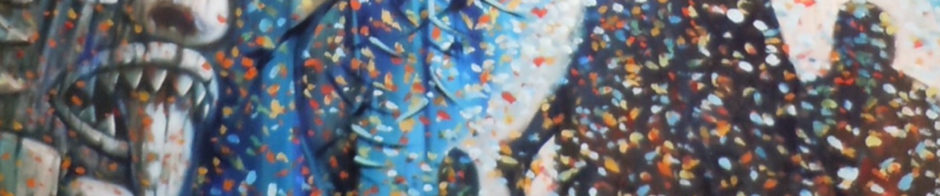
Writing is easy, you sit at the typewriter, open a vein and bleed.

Paul_012, CC BY-SA 4.0 <https://creativecommons.org/licenses/by-sa/4.0>, via Wikimedia Commons
My aim in writing has always been to get to a deeper, grittier place, beyond the personal into some universal but often unspoken experience. Yet, getting to the central core of rawness isn’t easy. I can’t begin to count how many times I’ve looked at an unfinished poem or piece of fiction and said to myself, “Push!” a process that feels as difficult as giving birth.
And at least when one gives birth, there’s a baby at the end of the effort. With creatives, the labor continues—the question of what lies behind the next edge continuing to linger as we try to reach deeper layers of mattering.
It’s important to realize that despite these efforts, sometimes our creative expression won’t be easily discernible—or even appropriate—for an outside audience. Occasionally I write “private poems” solely for my own cathartic release in lancing some emotional clot.
Yet, having gentle, loving witnesses can enhance and deepen our creative confidence—as long as they stay in the role of witnesses, not judges. When a witness tells me what they liked or noticed, they tap into that shared place I’m reaching for and let me know that my words touched them—and mattered.
If you’ve never shared your art, music, dancing, writing, etc. with other people, or only had bad experiences because the people you shared it with gave you unsolicited and unhelpful criticism, I recommend finding someone who understands the difference between witnessing and judging. (Note: I’m not against and fully aware of the benefits of constructive criticism, but judging is a different process from witnessing, which should be done at a time when the creator is asking for and expecting it.)
There are many community writing and other creative-based class settings that use a witnessing framework. For dancers–or for anyone who simply likes to move–Authentic Movement is built on the model of mover/neutral observer.
If classes don’t appeal, find a friend you trust—perhaps someone who’s also engaged in something creative where you can both share the roles of creator and witness. Remind each other to keep comments to what you liked and/or noticed, and then bask in their affirmation that yes, indeed, you matter.
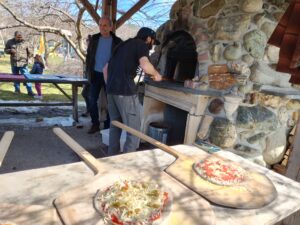
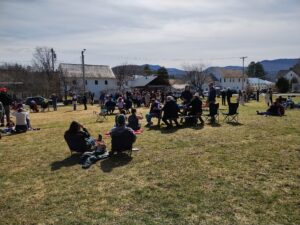 Things seemed pleasantly normal in the hour before the big event. People donned eclipse glasses to sneak views of the disappearing sun, children ran through the grass playing, and adults waited in lines for free pizza cooked in the community stone oven or to silk-screen a t-shirt as an Eclipse Day souvenir.
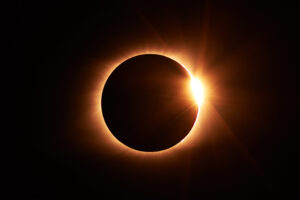
 But when totality hit, something shifted in the energy. There was a hush among the crowd, a kind of collective “wow.” My eclipse glasses now dark, I was nervous about viewing the corona with unprotected eyes, but there it was, eerie and other-worldly, the tiny ring of light flaring in asymmetrical bursts before settling to a steady glow like a small spark of hope.
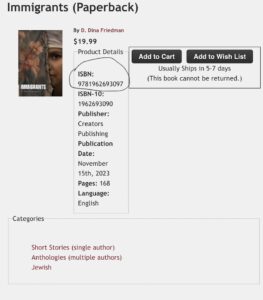 and that didn’t happen until six weeks after the book was published. In the meantime, I was grateful to the bookstores who were willing to take copies of