As the year draws to a close, here’s what I’ve done in the publication/submission universe:
POETRY:
- 86 rejections
- 18 journals accepted 22 poems (Including one poem in Rattle!)
- 1 chapbook accepted–Very excited about Here in Sanctuary–Whirling, which is forthcoming from Querencia Press in 2024. This dedicated and spirited small press has been a dream to work with. Cover reveal is coming soon!
- 2 Pushcart Prize Nominations: Thank you so much to Gyroscope Review and the River Heron Review for this recognition.
- 20 submissions still pending
SHORT FICTION:
Since I knew Immigrants was coming out soon, I only sent out one short story that wasn’t in the collection. That story got 12 rejections, with 2 pending.
The more exciting news on this front was that Immigrants did come out just last month and has already gotten some lovely reviews on Amazon and Goodreads. (Of the 13 stories in this book, 8 have been previously published by other journals.)
For those of you playing the submission game, be aware that stories, especially those on the longer side are harder to publish than poems, especially for a print journal that has to deal with space considerations.
CREATIVE NON-FICTION:
Essays I sent out were rejected 11 times, with 6 submissions still pending. One of the rejections made it to a final round and one of the pending submissions is in the final round. Also in this category–2 guest columns submitted to and published by our local newspaper, The Daily Hampshire Gazette: Losing the Light and Let Them Wear Tutus.
LONGER WORK:
I queried 27 agents this year about my music memoir, Imperfect Pitch. Three agents sent actual rejection letters, 3 are still pending (sent within the last three months), and 21 ghosted me. Of those that ghosted, 2 of them first asked to see a proposal and then ghosted when I followed up.
I also sent the book to three small presses and received 2 rejections. One small press submission is still pending.
And finally, I did take another stab at submitting a novel I’d given up on when I found out that Delphinium was considering unagented queries. The editor asked to see the whole book, and rejected it a month later with a letter that began, “Deer Dina…”
All these rejections may sound depressing, but I’m really okay with them. I’m glad to have far exceeded my goal of getting 100 rejections, and as I’ve said to many fellow writers, I make a point of not letting any rejection bother me for more than 10 minutes.
Besides the successes are incredibly sweet, and I’m grateful (and, quite honestly, also terrified) any time some of my words make it past my computer into the big, wide world.
Onward to 2024. Happy New Year!
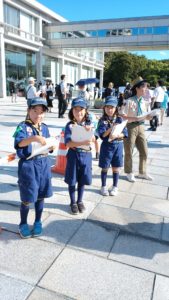 And the security people who searched bags in the extremely orderly array of lines were efficient and respectful as they handed people shrink-wrapped cooling towels, which seem to be a staple in the “wicked hot” Japanese summer–consistent temperatures in the 90s that feel even hotter due to the high humidity.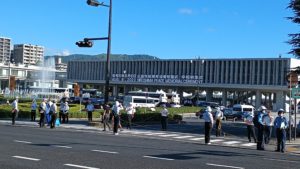

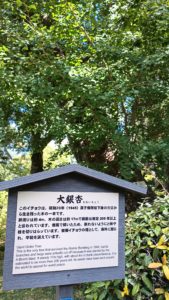 The day before, we had gone to the city gardens and seen a large ginkgo, one of only three trees that survived the bombing. We also went to the Peace Museum and barely made it through picture after picture of burnt bodies, story after story of people wracked with despair as they stumbled through rubbled streets, trying to find their loved ones. This was made even worse by the short political exhibit that followed, which emphasized how the U.S. felt it was “worth it” to drop this new weapon on already nearly defeated Japan if it would keep the Soviet Union from entering the war and sharing the spoils.
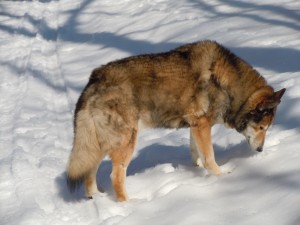 One of my favorite suggestions (and a practice I already regularly engage in) is walking in nature. I learned this from my husky-shepherd, Lefty, who quickly made it clear that the key to keeping him calm was a long off-leash walk in the woods every day. I found this break so nourishing, I’ve continued the practice. Even though he’s been gone for 12 years, I make a point of walking daily in all kinds of weather. And when I need an extra nudge to get my tired or tense torso out the door, I channel the ghost of my four-legged personal trainer, remembering that even at the very end of his life, he’d battle his own demons of arthritis, fatigue and lethargy for the joy of being in the woods.
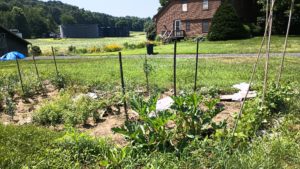

 I highly recommend writing dates with friends (either in-person or on Zoom) as a way of getting going. In addition to enjoying a brief visit before writing, I couldn’t just tweak a poem or two and then get up to succumb to the call of the unpaid bills or the weedy garden, because at the end of the session I knew we’d be reporting to each other on what we’d done and possibly sharing some of our work. Even as I flitted from poem to poem and took several breaks for Wordle and its Dordle and Quordle variants, not to mention checking email and social media, I kept coming back–until I could look at a poem and remember why I wrote it and why it might still matter. And that helped me finally make the shift back to my creative center.