How do you know when something is finished? Is everything a draft until you die?
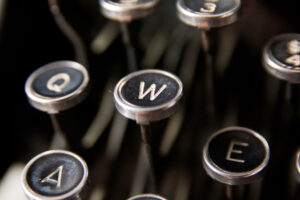
Photo Credit: StevenDePolo on Flickr
This question was posed last night to three writers from my community at a reading last night: John Shierer, Darlene Elias, and Fin Finley. These are writers I’m happy to know and even happier to listen to, all of whom were authentic in using language beautifully, clearly, and compassionately to tell their own truths. John is a master of the 100-word story whose turn at the end leads you right back to wanting to hear the whole thing again. Fin always impresses me with her eye for detail and a voice that straddles a perfect edge between snarkniness and vulnerability. Darlene writes passionately about her own life as a Puerto Rican woman with roots in the barrios of the Bronx and Holyoke, MA, evoking much deeper questions about racism, generational trauma and womanhood.
People asked several questions at the end, but the one about knowing when your work is finished was the one that stuck with me. I hadn’t heard the “it’s a draft until you die” quote, but I’d heard a similar sentiment: Projects are never done they’re just abandoned. Still, I appreciated what each writer had to say on the subject.
Even as I was reading my story tonight, I was rewriting it in my head, John said (paraphrased as best as I can remember). I had to laugh, because I do exactly the same thing. Sometimes I’m swift enough to change a phrase on the spot from the inferior phrase that’s written on the page, even as the cruel inner judge starts its rampage–How did that crappy sentence ever make it into print?
Fin had a more positive response, (also paraphrased): There’s often just a point when you feel something. It could be tears, or some kind of oomph or other emotional reaction. And then you know that you’ve said whatever it is you really wanted to say. I resonate with that one, too. Some snotty writing pundits decry such sentimentality, but ultimately, while most of my writing is intended for an outside audience, it still has to get through the gatekeeper audience of one: me. So if I’m moved, that’s a good beginning. The question is whether I’ll still be moved when I read the piece tomorrow, and the day after that, and the week, month and year after that…Is the impact momentary or can it hold?
Darlene talked about the importance of deadlines–timelines in which pieces had to be done, perfect or not. And this is also a good thing to remember–especially for recovering perfectionists. I make it a point to spend no more than one-to-two (well, occasionally three) hours on a blog post, and I’m determined complete each one in a single day. So, while I do read over my drafts several times before hitting the post button, making little tweaks here and there, I don’t obsess on getting getting my posts perfect and think of them more as musings in progress. They might turn out very differently if I gave them a week to simmer, but I’ll never know.
Poems, stories, or essays targeted for journals are an entirely different matter. I can’t read over prose I’ve written without omitting at least a few sentences and words that clearly don’t need to be there, though in most of my “finished” stories (which have gotten to a point where I have the emotional oomph) I don’t tend to mess around too much with the plot or the characters. But I have often deleted a page or two at the beginning or end. Or a random paragraph in the middle, or added something to a scene that felt chopped off.
And I do have some poems in my file that have 5 or 8 or 10 different versions. Sometimes when I take them out to work on, the tenth version seems no better than the first version. Often it seems worse, but the first version also feels like an idea that’s only half-baked. These are the projects that are abandoned. No flood of tears or emotional oomph in sight. But every once and a while a year or two will go by and when I’m going through my files and “Kondo-izing,” I’ll find a gem in these abandoned piles that I can polish into sparkle–and, dare I say, finish it!
Everything will be grand, then–until I read that piece at a reading somewhere and rewrite the whole thing in my head.
Subscribe at https://ddinafriedman.substack.com