Yesterday, I slipped on a wet floor and banged up my knee. And today, I’m determined to baby it. So no yoga class, and certainly no race-walking or bouncing around to cardio videos. This is a huge break in my pattern of always physically trying to do as much as I can despite whatever minor discomfort I’m experiencing. But it’s time to face the fact that I’m older; my body is more compromised, and the last thing I want to do is let a small injury turn into a large one because I didn’t give it time to heal.
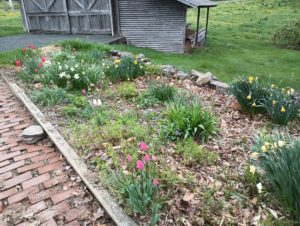
Meanwhile, my hungry mind is alluring me with alternatives. Maybe I can do a restorative yoga video, or try a flat, non-strenuous half-hour walk. Or find a spot where I can sit at the edge of the garden and pull a few weeds. Since my knee doesn’t really hurt that much, these messages sound tantalizingly sensible, even though I know I should make sure to be careful. Still, what’s wrong with taking a couple of shortcuts to make my day feel more settled and normal?
And is my resistance to having a day with minimal physical activity connected to knowing that if I don’t do any of these routines, I’ll have a lot more time–i.e. too much time–to face the blank page?
Sometimes I wonder if filling up my days with routines–even healthy routines–is one of the ways I sabotage my creativity. If I know I only have a couple of hours in my day that are designated for writing, I can easily fill them with smaller writing tasks like revisions, or submissions, or blogging, or marketing/political writing, or editing/reviewing work for others. And while all of these are important in my writing life, focusing all my attention on them can mean never getting to the next big project, especially if I convince myself that to tackle something larger, I need more mental bandwidth and bigger chunks of time. Yet a day like today, when I have a lot of open time, feels like one of those expansive western landscapes I wrote about on my recent trip to California. They are undeniably gorgeous and awe-inspiring, but they also leave me unsettled.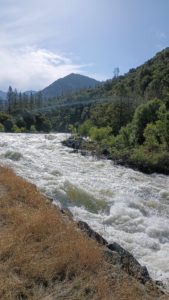
Even when I am more engaged in my writing life, another way I sabotage my creativity is going for the “easy out” when working on a piece, because I’m often just trying to get it done rather than really examining its total potential of where it can go–in other words, taking the shortcut. This isn’t because I have any real time constraint. I can always come back to something the next day or the next week or the next month, and often do. However, it feels as unsettling as an open landscape or open day to leave things unfinished for too long.
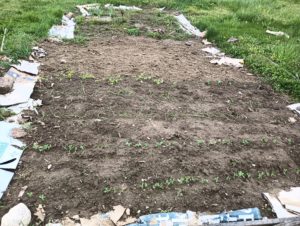
True confessions: I’m three-quarters into this open day, and I’ve cheated. A lot. Instead of facing the bigger contours and potential of the blank page, I made a batch of granola and put up a pot of dried chickpeas to incorporate into dinner. And I did take a slow 30-minute flat walk with hiking poles, and spent about 45 minutes on some very easy gardening, neither of which compromised my knee. But though I kept my focus on smaller writing tasks, I’m grateful that in addition to sending out two poetry submissions, I stumbled on some new and useful insights that helped me revise a couple of poems I’ve been stuck on (and that I’d previously sabotaged myself with by thinking they were finished). And I wrote this blog, which means, at least, that I’m accepting and acknowledging the pattern. So while I still might be seduced by the ease of shortcuts, I’ll make a point of treading even more carefully through the minefield.
To subscribe to this blog, sign up at ddinafriedman.substack.com
 I highly recommend writing dates with friends (either in-person or on Zoom) as a way of getting going. In addition to enjoying a brief visit before writing, I couldn’t just tweak a poem or two and then get up to succumb to the call of the unpaid bills or the weedy garden, because at the end of the session I knew we’d be reporting to each other on what we’d done and possibly sharing some of our work. Even as I flitted from poem to poem and took several breaks for Wordle and its Dordle and Quordle variants, not to mention checking email and social media, I kept coming back–until I could look at a poem and remember why I wrote it and why it might still matter. And that helped me finally make the shift back to my creative center.
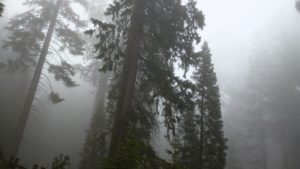 Taking any creative risk is like driving through fog. We may not see the entire landscape of where we’re going in front of us; perhaps we can only see the vaguest contours, or a few inches of the road’s white line and a pair of headlights coming at us from the opposite direction, but we plod on ahead, focused only on what we can see, with the faith that if we keep going, the tops of the trees will slowly come into view.
 In fact,