Once again, I’ve signed up to write 30 Poems in November to benefit the Center for New Americans, which provides English classes and many other types of advocacy for immigrants here in western Mass. And once again, as October draws to a close, I’m feeling that trepidation of adding one more item to my to-do list, wondering how I’m ever going to churn out 30 poems in a month–even poems that are unfinished and far less than stellar.
It hasn’t helped that my writing life has slowed to a crawl. Paperwork related to my father-in-law’s death, last minute election volunteering, putting the garden to bed, health issues with relatives, the Jewish holidays, my grandchild’s birthday, editing deadlines, and a flurry of visits with friends and family have made it hard to get to my desk as often and regularly as I’d like. Even this blog post–which I usually aim for mid-week–is late. (I just got a warning post from SubStack, letting me know that I had only two more days to fulfill my pledge of blogging weekly, LOL!)
But one of the things I love about writing 30 Poems in November is that permission to slow down. To make writing practice front and center again.
I find I’m most successful at birthing poems when I can be out of my to-do list and into what I think of as the fuzzier part of my brain. Then, I just let the pen flow and the words come–sometimes easily, and sometimes with a bit of effort, but the trick, for me, is not to try too hard to construct *a poem* as much as let myself sense what I’m sensing and free associate from there. And from that pile of words, I can often sift through and find the gems, threading my path forward.
The hardest part is to let the chaff fall away–the distractions, the judgment– and let myself fall into the “wow” of whatever is underneath all that detritus.

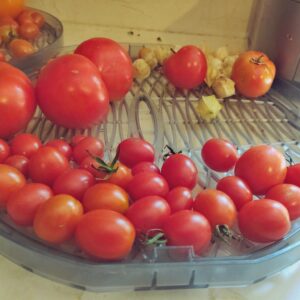
Photo: D. Dina Friedman
And lately, when I need lessons in falling into the sensual wonder of discovery, I get them from my two-year-old grandchild Manu. Recently, he’s been entranced with the abundant display of Halloween decorations in his neighborhood: the furry spiders perched on the hedges, the life-sized dragon with the blinking red eyes, the pumpkin faces, the creepy hands sticking out of the ground, the lanterns hanging from the trees.
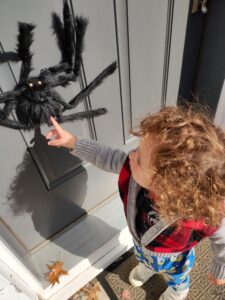
Photo: D. Dina Friedman
Every day, he asks to see the dragon and the spiders. He takes his time, exclaiming, Oh, there’s another spider! before rushing over to investigate and dig his little hands into the fur.
After the “spider house,” we go next door to the Japanese rock garden, where he watches the brightly colored fish, and rains handfuls of small, cool rocks, listening to the pleasing sound they make when they hit the ground.
Poems are everywhere. Hopefully, some will come to me this November.
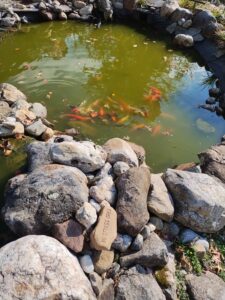
Photo: D. Dina Friedman
And yes, please consider contributing to my fundraising page for this worthy cause. No donation is too small! Many thanks. Happy Halloween and Happy November!
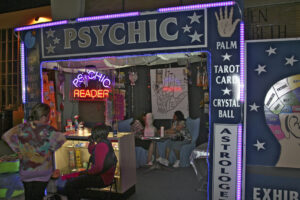


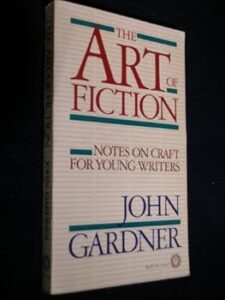 And this, I think, is a good lesson for fiction writers–even if the “lies” (which I’d prefer to call “stories” in this context are not intended to do harm or be taken as factual. Writer John Gardener in The Art of Fiction writes about the importance of creating “a continuous unbroken dream” where the reader is totally ensconced in whatever reality the writer has created–kind of like a virtual reality experience that’s dependent on words, rather than 3-D classes.
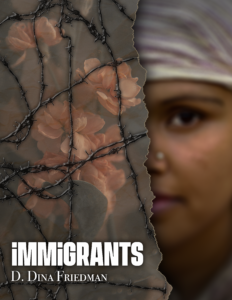 When I wrote my collection of short stories, I wanted to emphasize how immigrants are everywhere, just as they were everywhere in my childhood. Some of my stories are overtly political, drawing on my experiences as an activist, but most of them aren’t. They’re simply tapestries woven with real people–some of whom simply weren’t born in the U.S. I write about humans in situations with issues. That’s what’s always grabbed me in fiction–the ways we struggle to love the world, each other, and ourselves.