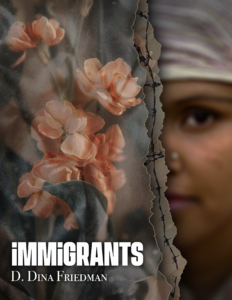
Yesterday I was supposed to have my book launch reading for Immigrants at the Odyssey Bookshop, but the weather gods had other ideas. The forecast was for snow, sleet, and/or freezing rain starting in the late afternoon and continuing all the way into this morning. While accumulations were not expected to be significant, the roads were expected to be slippery.
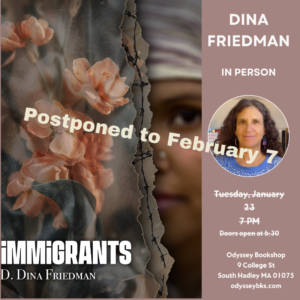 While I’m an admitted snowphobe when it comes to driving, I knew I’d likely be able to make it to the bookstore, which is only 5 minutes away from my house. But I also knew that others who were planning to come were driving much longer distances. I didn’t want to ask people to risk their safety. And I didn’t want to risk a low turnout. Even though I’d already bought the snacks and the ingredients for brownie-making, I decided it would be best to postpone.
I don’t know if it’s from being born under the sign of Gemini, but communication has always been huge value for me. My pet peeve is when people don’t return my calls or texts, and it infuriates me when I’m not communicated information I need. So, even though the bookstore was willing to post on social media and notify the people who’d actually signed up to attend the event, I wanted to make sure that people who were thinking about coming, or might have been planning to come and not signed up, didn’t make an unnecessary drive through the slush or ice only to find out the event had been cancelled.
This meant a whole lot of texting, emailing, FB messaging, social media posts, etc. And it meant I ended up connecting with people I hadn’t spoken to directly, which felt really lovely. While my core identity is introvert, I definitely have an extroverted side, and all that communication gave me a surge of energy that kept me going and focused on the task. I was so touched by how many people answered my messages in a warm and personal way who thanked me for making a call on the side of safety. And I was surprised by the number of people who said they had planned to come, or that they couldn’t have come tonight but they could come on the new date. It felt like such an overwhelming bubble of support from my community, this big universal love…
Between all this, I was also using that surge of energy to attend to political issues involving real immigrants, working with my immigration justice affinity group on a short emergency mailing to drive calls to Congress against the potential Senate deal that would trade away current protections and due process for people at the border seeking asylum and expand deportation of people who are already here, all in exchange for more military weapons for the Ukraine, Israel, and Taiwan. You can read more about that here.
So, I guess there are silver linings in a snowstorm–including the beautiful scenery when I woke up on Wednesday morning.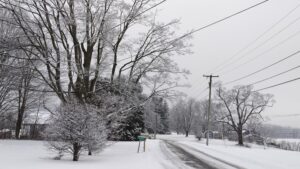
And, I was told by one friend that the new date February 7, has much better numerology–#8, a number which supposedly resonates with self-confidence, inner strength, and inner wisdom, among other things. I don’t know very much about numerology, but I’ll take it.
Hope to see some of you local people at the Odyssey Bookshop on February 7.
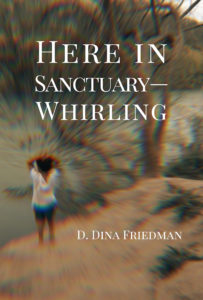 And as I was going full-steam ahead, a surprise snuck up on me. My poetry book Here in Sanctuary–Whirling was suddenly in its final stages of pre-publication. In fact, it’s scheduled to come out from
  While I did what I knew I was supposed to do as a good book marketer: posting the link widely on social media and sending it around by email, there was a part of myself that just wanted to crawl into a dark place and hide from the rushing current of accolades. Can’t I just be humble? that small inner part of me whined. Why do I have to call so much attention to myself?