Managing Difficult Feedback

A few days ago in one of my writing groups, a member told me she didn’t like the stories I’d submitted because they were too depressing. “The world is such a mess,” she said. “I don’t want to read things about death.”

While this writer is 100% entitled to her opinion, as well as her subjective preferences and dislikes, I found this a particularly hard comment to take in, even though I dutifully wrote it down and thanked her for it. And before going on, I’ll add that I trust this very talented writer in matters of craft. She and I have been in a group together for more than 30 years, and over those years, she’s offered tons of astute and discerning feedback that has made me a better writer.

But this comment wasn’t about craft. It was about personal preference. That’s what made it so hard to deal with.

And what am I supposed to do with that? Only write about happy things?

I’ve been around many writers who’ve bemoaned their predilection for dark subjects, lamenting, for example, being unable to write about anything but their dysfunctional family, their recently passed lover, their fear of climate disaster, or whatever. But several gurus on writing continue to remind us–we don’t choose our subjects; we submit to them.

Because, whether we like it or not–and whether others like it or not–our purest creative juice can be found in what matters most to us at the moment we’re committing pen to paper or fingers to keyboard. Sometimes these can be joyful places; other times we’re compelled to delve into the dark spots. The important thing is to stay with the authentic truth of what matters to us, but attempt to do so in a way to make the impact of what we’re writing universally felt by others.

However, there will be times when these others will not want to feel what we’re writing. All of us have moments where we choose the rom-com instead of the true-to-life re-enactment of some horrible moment in history. And that’s okay. Taking care of ourselves also matters.

So how do we balance our needs to limit how much darkness we can deal with and still be helpful to our peers in the writing world?

We need to bring less of our personal biases and more of our writing selves to the table. First and foremost, we need to consider the piece from the premise of what the writer is trying to do. Then, as much as we can, we need to put our subjectivity aside and respond from an impartial read focusing on our knowledge of craft on where the piece is doing what the writer intended and where it isn’t quite yet meeting that mark. And I noticed, after I got home and read her line comments, that even though my writing group friend’s overall comment in our meeting got under my skin, her notes on the actual manuscript were far more measured and extremely helpful.

And, later I realized that it was actually a good thing l that I knew her biases up front when I read her line comments, because I could evaluate them knowing more about the subjectivity that influenced them. Much as we try to eliminate it, every comment will have a subjective element. There are many kinds of writers and readers out there, all of whom will have their different list of favorite spices to add more perkiness to what’s being offered.

This doesn’t mean that feedback will never sting again. I’ve come up against many readers who don’t get me. But don’t get avant garde jazz or super abstract art. That doesn’t mean it’s bad. It just means I don’t get it.

Anyway, while I’m not ready to abandon dark writing, I am considering the idea of putting together all the joyful poems I’ve written in a little collection. My friend certainly isn’t wrong in wanting to consume content that amplifies all that’s good in life.


When the World Goes Awry, Make Art!

I didn’t watch the debate last week. I knew it would make me too anxious, so I made a conscious choice instead to play the piano, my general 9 pm habit. Not knowing anything about the debacle unfolding, I tried to work out knots in a Chopin nocturne and then run through the first movement of the dark and emotional Beethoven Pathetique, giving it all the passion I had as I channeled a niggly unease–perhaps a sixth sense–that things were not going well. What else could be expected from giving a raving liar free liberties to say whatever he wanted without checking a single fact, and knowing that the media instead would be paying the most attention to the other candidate’s slips as warning signs of his age in order to frame that as a more relevant liability?

Circa 1722, German organist and Barouque composer, Johann Unknown source, CC BY-SA 4.0 <https://creativecommons.org/licenses/by-sa/4.0>, via Wikimedia Commons

On January 6, 2021, I was also playing the piano–to try to deflect the horror I was feeling as reports of the Capitol Riot began to filter through. When the World Goes Awry, Play Bach, I later titled a chapter in my memoir. Bach is logical; his music patterned on expectations that never deviate too far from what you might expect. It’s like a calming hand on your shoulder, telling you things will be okay.

I fear we’re living in a “post-Bach” world.

As the pictures and videos plastered the news in the aftermath of January 6, I had to face the nagging question. Why should I be wasting my time playing the piano when there’s so much vi­­olence in the world? And now, I’m thinking the same thing as each day inches closer to the possible end of our democracy, especially as the president has just been granted the powers of a king. Is playing the piano any different from the orchestra on the Titanic, fiddling away as the ship went down?

Yet I remember talking with a friend, a visual artist, shortly after the 2016 election. Just do your work–your writing, he said. That’s what we all must do–keep doing our work.

How can we use music, or writing, or painting, any of the arts to channel not only our terror, but our power?

Last night in our poetry critique group, one member presented a chilling and brilliant poem, reminiscent of Sylvia Plath, centering on the psychological effects of the spying on people in East Germany, with only the merest hint of how this was beginning to infiltrate America. The poem was so good, none of us wanted to follow it, but I volunteered. My poem-in-progress contrasted the bleakness of my childhood New York City landscape with my flower garden, exploring through these metaphors themes of aging and the process of acquiring a wisdom that comes hand-in-hand with gratitude, even in times that challenge us and demand our attention to do what we can to make good in the world. It began,

I don’t believe in losing hope
I believe in finding it.

And I do believe we have to keep looking for hope. And that creating art–in any form–is one way of making good in the world, whether you are uncovering horrors, or simply nourishing people by calling attention to beauty and gratitude.This doesn’t mean we can depend on art to change the world on its own, and it doesn’t excuse us from doing more than writing the next poem or making the next painting. ,But art can help us process our deepest feelings, which can enable us to evolve from a state of numbness and shock into a place where we can reclaim our power. And sharing our paintings, photographs, stories with others can also inspire our viewers/listeners to get through their own numbness to a place of action.

What did Arlo Guthrie say? Fifty people a day walking in singing a bar of Alice’s Restaurant and walking out…they may think it’s a movement.

Revisiting “Finished” Work

Yesterday, as an offering to alums of my MFA program, I had the opportunity to meet with a literary agent to talk about my piano memoir, Imperfect Pitch. I’d sent her some materials in advance–an overview/summary and some sample chapters, but I had no expectation that she would open the conversation by telling me she’d fallen in love with the book and was happily going to take it. Those pipe-dreaming days are long over, and the book has already been rejected by more than 30 agents. The few who took time to actually write back (rather than simply ghost me) all said the same thing. The issue wasn’t the writing–which was strong. The issue was the marketability.

So, not wanting to waste my precious 15 minutes searching for compliments or reassurance, I dived right in. What could I do to make this book more marketable?

Apparently–though not surprisingly–it’s extremely difficult to publish a memoir with a major publisher unless you are already a celebrity. Of course, more people would rather read about Taylor Swift than about me. I know this. The only reason I’ve been trying the “big-time channels” with this book is that I believe its underlying message will inspire and help people who’ve lost their creative north star, as I did in my music life, succumbing to the pressure of perfectionism and performance and losing all joy in the creative process. So I’d like the book to get greater circulation than it would from a smaller press.

“You need to position this more as a self-help book,” the agent told me. “Have more about the overall arc in the first chapter about what the reader will find out, and make it clear to readers that the ultimate payback will be getting permission to go back to something they cared about. Also include some instructions—make them broad, so they can apply to other arts.”

What? Give away the arc in the first chapter? My fiction-writer self is quaking at that comment, which goes against everything I’ve learned–both in my MFA program and way before. It’s hard enough to develop the darn arc. Why would anyone read a book if they already know what’s going to happen?

“In non-fiction, the journey is in the destination,” the agent said. She also suggested not being afraid of name-dropping if I knew anyone in the writing world that I could say would help promote the book. Ha! I know many people in the writing world, but most of them, like me, are not household names. In the music world, though, I do have only a couple of degrees of separation from Yo Yo Ma. I wrote about the time he guest-coached my younger child’s chamber group in the book–but likely he has better things to do, like call attention to repressive immigration policies by playing cello on the U.S./Mexico border.

Oh well, I’ll tackle that issue later. First, I’ll have to think about the reframing. I’ll keep the current version, just in case, but in general, I like revision, which I think of as re-visiting, rather than correcting something that was previously wrong. I’ve recently discovered that in my piano life, as I re-visit pieces I struggled so hard with four years ago, like Beethoven’s Pathetique, I have a lot more facility in bringing them back. Frequent practicing has made my fingers stronger and more flexible, and I can focus less on the notes and more on the shadings of a piece, how I want to express it, which gets to the soul of the creative process–especially as I’ve learned to let go of the expectation that I’ll play every note and every rhythm perfectly and without bumps.

I think this is also true for writing. As I’m working on several projects at once, I’ve become even more aware of the difference in my writing confidence and fluidity between slogging through a first draft of a new novel, and revising a poem or prose piece where I already “know the notes.”

So I’m willing to dive in and try. Maybe this rewrite will feel too loud and brash, or predictable, but maybe I can strike just the right balance between memoir and self-help to please both the publishing gods and my own creative vision–and feel jazzed by the discovery of what my fingers and brain can do.

Here’s pianist Daniel Barenboim playing the Pathetique. Enjoy!


Self-Promotion and Blueberries

For the past several weeks I’ve been struggling to figure out how to use this blog to promote my recent podcast and radio interviews in an engaging way that will mean something to others, but I keep getting sidetracked by things I’d rather write about.

Today, instead of self-promotion, I’m feeling called to talk about blueberries.

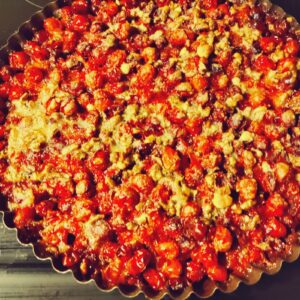
Photo: D. Dina Friedman

Our blueberry bush is one of the earliest blooming bushes I’m aware of–most of our friends, neighbors and surrounding farms don’t have blueberries until July. Ours has typically started at the end of June, but that date has inched up over the last few years, likely due to climate change. Our harvest season is short–around 2-3 weeks–but the blueberries are the best: crisp (not mushy) juicy, and a perfect mix of tart and sweet.

We pick the blueberries every day–sometimes twice a day–to make sure to catch each of them at the perfect stage of ripeness. It’s a slow, meditative process that I totally love, though in the current heat wave we’ve only gone out in the early morning or just before sunset. It’s been taking close to an hour to get a whole pint, which makes me think of the pressure on blueberry pickers on commercial farms. Of course, with their volume, they’re likely to be less discriminating in what they pick in order to make a profit. And this makes me think of the profit-making motive in writing, the people who make their living churning out one to two formulaic novels per year, or those whom publishers have deigned as destined for celebrity status, or actual celebrities whose books sell well even if they’re badly written or dependent on the skills of a ghostwriter.

While I’ve made it a theme of this blog to recognize and counteract perfectionism, I’m not ready to do this when it comes to blueberries. For me, they’re not a commodity; they’re a delectable treat. And while I know it’s a good idea to let go of the pinnacle of perfectionism when writing, I’m not ready to give up the joy of scaling the cliff in search of artistic excellence, even if it takes a long time and I never quite get there.

And as for the commodity thing–oh yeah, self promotion, as in throw some more mud at the walls and see what sticks–some marketing seminars I’ve been to have insisted that getting on lots of podcasts is the key to author success. While I highly doubt that, I did enjoy talking about political poetry on WMUA’s Poem Talk–both mine and this amazing poem by Jane Hirshfield. I also loved talking about perfectionism and my piano journey in this video from HerStory Circle and on Emma Lynn Dowd’s radio show (Episode 56, starting around 15 minutes in). If you feel moved to listen to any of these, enjoy!

Photo: D. Dina Friedman

If not, I hope you have a relaxing day dodging the heat, with a cold glass of something and perhaps a few fresh blueberries.

Perfectionism and the Birthday Blues

Yesterday was my birthday, which once again brought me right up close to the endless bumps in the winding road toward eschewing perfectionism and embracing self-acceptance.

Even though I know it isn’t productive, I can’t quite let go of my little-kid fantasy that my birthday should be a perfect day where everything I do is significant and special. And my inner kid wants this to happen spontaneously, with others taking charge of the orchestration who will magically know exactly what I want them to do. My inner kid, who still thinks I’m seven and my birthday is the most important day of the year, wants to be surrounded by celebrating family and nearby close friends, and flooded with cards or phone calls, or texts, or social media posts from people farther a-field with beautiful heart-rending messages on how much I matter. But I’m sixty years older than seven. Time to be an adult–as I’ve had to be ever since high school, when my birthday often coincided with final exams.

Adults are busy people, and I admit, I’m not someone who makes a big deal about other people’s birthdays, so it’s unreasonable and impractical to think that people should make a big deal over mine. And having taken a deep dive into my struggles with perfectionism, I can now see how all this birthday stress is just another manifestation of how easy it is to make yourself miserable by getting tangled in the morass of unrealistic expectations.

So, here’s what I’ve learned over the years:

(1) If you want something to happen, make it happen. If it involves others, ask them for what you want. I both like surprises and I like to be in control, so I’m very hard to please, but one year I asked my partner, Shel, to take me on a surprise get-away, location unknown. We ended up having a great few days in rural Quebec, with only one big snafu. Shel messed up where he booked our accommodations, so we ended up double-paying when we no-showed at the place we were supposed to be on the first night and surprising the innkeeper when we arrived at the second-night place a day early, but so what! At least they had a room for us.

(2) Make your own specialness. Ultimately, the choice on whether or not to be happy resides with me. Over the years I’ve planned a lot of birthday adventures that were solo, including a two-day silent retreat in a cabin in the woods, and several day-long jaunts to some of the beautiful and spiritually inspiring places within an hour of home. And guess what! These weren’t perfect either–but they were still wonderful, and at least I wasn’t blaming others for their inability to do the impossible and create a totally perfect day.

Yesterday, I did neither of these things. It was a scheduled day to take care of my grandson, and the adult in me said my birthday wasn’t a reason to forsake that responsibility. I wouldn’t say I had a perfect day, but I had a good day. Shel made strawberry crepes with camembert cheese for breakfast–a surprise that I didn’t need to control (LOL). And when I arrived to take care of Manu, I was greeted by his parents with a strawberry rhubarb pie. (Strawberries are an important birthday theme for me, since it’s strawberry season here in western Mass.)

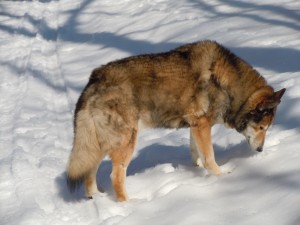
Manu was delightful and we spent a lot of time listening to wolves on this great short video and doing wolf howls. For the rest of the day I ran errands and did normal stuff, which also felt good. Sometimes normal is what we need. Though it also included answering a lot of social media happy birthday posts, and speaking on the phone with a number of family members and close friends, who had taken the time to call and make me feel special. Afterwards, Shel and I went out to dinner and then to get my free birthday sundae at Herrell’s ice cream to close out a lovely day.

Yet, today, I can’t help but breathe my post-birthday sigh of relief that it’s over. Another bump navigated on this endless road. Hope the path will be easier traveling for a while.

Subscribe at ddinafriedman.substack.com

Diving In

If I’m at a beach or a lakeshore, I’m one of those people who inches my way into the water, one excruciating shock of cold at a time. But with writing, even when I have no idea what I’m going to say, I just grab my pen or my keyboard and dive in!

Tim Marshall timmarshall, CC0, via Wikimedia Commons

That’s what this week has been about, as I’ve now committed to exploring the murky idea I have for another YA novel. My goal has been to write two handwritten pages every day. I try not to edit as I go, even as shoddy writing dominates and the plot/character contradictions pile up. I even try not to read what I’ve written the day before when I begin, because I know that if I do I’m going to get bogged down in trying to revise it–and I may not even use the scenes I’m generating. I only read enough to jog my memory so I can continue to go forward.

Some people love first-draft writing because they can make up whatever they want without worrying about it. I find doing the first draft of a prose piece the hardest part of the writing process. Conjuring people and situations out of wisps of my consciousness always feels daunting, and outlines feel even harder. I need to actually write to discover what I’m going to say.

Eventually, I hope I’ll come to a point where the ideas will feel more clear and I’ll have a better sense of the characters and overall trajectory, even if I still might not know exactly how the book will end. This will be when I’ll start typing up what I have, revising as I go, but likely saving anything I’ve cut in a different file in case I want to refer to it later. Then, I’ll probably keep writing two-page segments until I get to a possible end, but likely I’ll do this on the keyboard and allow myself more leeway in polishing what I’ve written before continuing.

This won’t nearly be the end of the process.

After I’ve written my way through beginning, middle, and end, I’ll put the manuscript away for a few weeks. Then I’ll read the whole thing through with a fresher eye to get a sense of it, making notes to myself on what needs to be added, cut or changed. Then the more intensive revision will start. This is the part I like–when I finally emerge from the thick woods and can see a thin path leading me on, as long as I’m willing to chop away the overgrowth and do some bushwhacking.

Once I get that draft done, I’ll share it with my fiction-writing group (and perhaps a few other people) to get their perspective about what is working and what isn’t. Likely, their feedback will inspire me to rethink the entire novel, generating another revision, which could focus on structure, character development, plot points etc. Depending on how confident I feel about that revision, I may ask my writing group to read the book again.

And again. And so it goes.

Eventually I’ll get to a point where I’m ready for micro-editing: searching for overused words, clunky phrases, wordiness, etc. I do some of this throughout my revisions, but considering not all the prose I generate will ultimately make it into the final draft, it’s been time-efficient to save focusing on this until the end.

When the book is as good as I can get it to be, even if it isn’t perfect, I’ll test the waters by sending it out. If it’s accepted, I’ll likely have more editing to do. I’ve been lucky in that every editor I’ve worked with has helped me make a book substantially better.

And if it doesn’t get accepted for publication, I may revisit and revise from time to time, if the book still holds interest for me. Or, I might just need to be satisfied with my enjoyment of the process. And yes, I do ultimately, enjoy the process of writing long prose. Why else would I have written 11 novels and one non-fiction memoir?

Time once again to brave the cold water and dive in.

The Power of Perseverance: Lessons from a Dreidel

My 20-month old grandson, Manu, has become obsessed with his dreidel, a toy top typically played with on the Jewish holiday of Hanukkah for “gelt,” which are coins or coin-shaped pieces of chocolate.

But Manu doesn’t know about chocolate, yet. And he’s shown no interest in the letters on the dreidel, which traditionally determine whether you win or lose, depending on where the dreidel lands. In fact, he rarely waits for the dreidel to land. For him, the joy is in the spinning.

“Spin it here!” he shouts, trying out his toy stove, my knee, the couch, the piano. “Grandma, spin it!”

Photo by Shel Horowitz

I never knew a dreidel could spin so well on upholstery.

He also tries places that never work: the curved handle on the umbrella stroller, the side of the bookshelf, the pointy roof of a Lego block. There is a thing called gravity–LOL.

But Manu doesn’t mind at all. He picks up the fallen dreidel and hunts around for another cool place to launch an attempted spin.

His optimism is a good lesson in not being afraid to try out what might seem impossible. This week I took my first tentative steps toward diving into a longer project, another YA novel. Writing bland and sketchy prose, I tried to let the characters in my head take their first few breaths on stage, figuring they’d reveal more about who they really were when they got to trust me–and I, them. My five handwritten pages are looking very much like the beginning of a “shitty first draft,” as coined by Anne Lamott in her wonderful book, Bird by Birda must-have for any aspiring (or semi-established) writer.

And from Manu’s perseverance I’ve learned something about approaching work that’s past the “shitty-first-draft” stage. Just as he refuses to be put off by places the dreidel won’t spin, I need to do a better job on not giving up so quickly on places where my writing doesn’t sing. Often I can substantially improve a piece by finding a better verb (or sometimes noun or adjective). If a word sounds flat to me–either too overused, not clear enough, or having a sound that clashes with everything else, I can painstakingly search for a word that comes closer to what I’m seeking. And I’m not at all ashamed to admit that my best buddy in this process is a fabulous on-line thesaurus called wordhippo.com, which breaks each word down to its possible meanings, and gives quick and clear definitions of the alternative selections to prevent me from falling further into the muck.

Who would have thought I could have learned so much from spinning a dreidel. I guess, as the words on the dreidel say–a great miracle happened here.

Humility and Spiders

Aside

My grandson, Manu, has become obsessed with the Eeentsy Weentsy Spider. We’ve spent large chunks of the last three days singing the song and looking at a small  strand of spider web dangling from the hallway ceiling. “That’s the eeentsy weentsy spider’s house,” I tell him. He doesn’t seem to mind that the spider isn’t there, or that I’ve chosen not to reach up and grab the web for him. I think it’s the idea of a spider and a spider web that intrigues him more than the actuality. In fact, today, I couldn’t find the spider’s web at all, but it still didn’t stop him from looking longingly at the ceiling and talking about the spider as if it were there.

I’m impressed with his ability to switch gears to imagination when reality is less satisfying–a common attribute of children that we often lose as adults. Sometimes, I still miss the imaginary friends I had when I was three (maybe because they loved me unconditionally and there were never any relationship issues to work out, LOL!)  But when I can access it, imagination has served me well in getting out of my stuck writing places, especially when I’m trying to fictionalize something that had its origin in a lived experience. The further I can get away from what really happened, whether that’s changing everything I can about a “character’s” appearance and demographics, altering the setting, re-thinking alternative ways the chain of events could have played out, etc., the freer I am to get past my own vulnerability to the emotional truth of the story I want to tell.

Tim Green from Bradford, CC BY 2.0 <https://creativecommons.org/licenses/by/2.0>, via Wikimedia Commons

And then, of course, it’s hard not to think about spiders without conjuring Charlotte’s Web, which we must have read to our daughter (Manu’s mom) at least ten times–before she was old enough to read it to herself at least ten more times. And I can’t even count how many times I’ve seen the movie. The book is about a pig on a farm who befriends a spider, who saves him from becoming ham and bacon by writing words in her web: “Some Pig,” “Terrific,” “Radiant,” and “Humble.”

Of these words, the one that sticks with me (with web-like sticky threads) is “humble.”

Having two books come out in the last six months has been a challenge to maintain what I consider an appropriate level of humility, especially as book marketing experts encourage me to scream, scream, scream from the social media rooftops and spend my days looking for places to plaster my “products” anywhere they might be seen.

And that is SO not my style.

I admit I may have a problem with too much humility, which the Mussar (a Jewish spiritual learning paradigm) equates with a tendency toward self-effacement. Yet, even posting about recent things I’m proud of (like getting short listed for the grand prize and winning first runner up in short stories for the Eric Hoffer Award, or doing a podcast about Here in Sanctuary–Whirling on the Bill Newman Show, or announcing/sharing upcoming readings or poems that were accepted in various journals feels like I’m on the edge of too little humility (equated in the Mussar as arrogance).

But, hey…I just got that all in, even if it was back-handed.

I don’t want this to be another “Dina Kvetches about Marketing” post. So, I’ll just say what I said to my friend, Alice, when we were studying the Mussar together: I want my writing to be recognized for what it’s saying and how it’s saying it. I don’t want it to be about me. In other words, it’s the message, not the product, and I’m not really interested in me or my books being thought of as commodities.

And if all this is just rationale for more self-effacement, I’ll counteract it right now by sharing a poem from Here in Sanctuary–Whirling, because it’s about a spider.

NOTE FROM THE AIR BNB IN TEXAS
Please Don’t Kill the Spider

He has a name: Septimus
because he lost a leg somewhere.

You might find him by the toilet.
Don’t shriek as you do your doo.

His poison is all in your head.
Didn’t you read Charlotte’s Web?

Humble is the word that matters.
Confront your failings. Take a selfie

if you’re lucky enough to spot him.
And put on your boots, hat.

This is cowboy country
land of brash bravado.

Where’s your gun?
A spider could be lurking under your pillow.

Unseen children taken at the border:
their parents’ lost limbs.