
It’s May, which means it’s time to get real about the garden!
April has always been a hard month for me emotionally. (I resonate with T.S. Elliot.) I generally feel as unsettled as the weather. The minute we get a warm day, I’m warring with my impatience, chomping at the bit to start planting, while at the same time feeling anxious about how I’m going to incorporate daily gardening time into what seems like my already too busy life. And when the days turn back to being cold and rainy, there’s actually a part of me that feels relieved that I can stay burrowed into my winter self for a while, though I wonder what masochistic inner voice is making such a silly choice. Meanwhile the crocuses, the daffodils, the rhododendrons, the pink and white flowering trees are lighting the world with promise but fading so quickly, I worry I’m not paying enough to attention to enjoy them before they’re gone.
But now it’s May. The peas, onions, cilantro, and tat-soi are all planted, and half of my garden bed has been prepared as I wait for some reliably warmer weather to plant the more vulnerable vegetables. A few of the daffodils are still hanging on, while the tulips I planted last year are springing out among the wild violets and dandelions. We’re still getting cold, rainy, weather, but this didn’t stop me from seeking the garden yesterday the minute I felt stuck with a writing project. There is something about feeling the dirt sifting through my fingers that consistently gives me my best writing ideas. My writing/gardening motto: When in doubt, go out!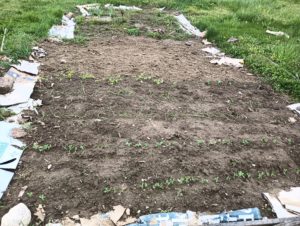
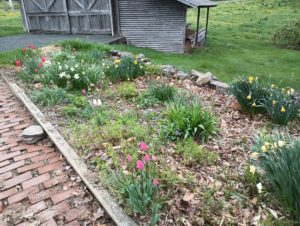
I didn’t grow up loving gardening. As a NYC girl, I think I was a teenager before I realized that vegetables didn’t come from the supermarket. When I first moved to western Mass. I didn’t really get what the fuss was about when people made a point of proudly showing me their tomatoes. Yet, gardening is a thing here, so when my downstairs neighbor at the first house we rented long-term said she’d teach me how to garden and we could make one together, I agreed. And fell in love.
Some people find the endless cycle of weeding and digging and mulching and watering a kind of drudgery, but I make sure to stop the minute I get tired of a task–which makes the 30-60 minutes I try to spend each day a joy rather than a chore.
What I love most about gardening is that I have no desire to do it perfectly. Each thing I manage to grow and harvest feels like nothing short of a miracle, even after more than thirty years of experience. If the peas don’t come up, I shrug and re-plant them if it’s not too late in the season, or figure I’ll buy some from a local farmer. Some seasons I’ve replanted cucumbers and zucchini four times before they didn’t wilt or get eaten by animals. While I like to exchange tips with other gardening enthusiasts, I don’t spend any time comparing my gardens to theirs. Really, all I want is to get my hands back into the dirt and dig up some writing revelations as I pull out the stubborn blades of grass. And to jump for joy as I see the asparagus spears poking their heads out of my little plot. And celebrate the delicious mint from last year that’s survived the winter and come again all by itself. Time to make a mojito!
To subscribe, sign up at ddinafriedman.substack.com
 It’s one of the stories in my forthcoming collection, Immigrants (Creators Press, Fall 2023).