True confessions: I’m not a big fan of Hanukkah. I don’t relate to the military story, nor do I like the commercialism and all the attempts to make it a Jewish alternative to Christmas. But I do love lighting the candles and watching light emerge out of darkness.
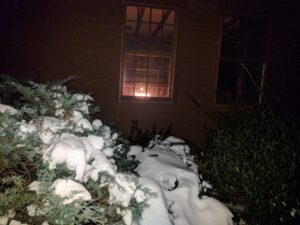
Our family has a unique tradition of putting menorahs in the windows on all sides of the house and then going outside and circling the house to see them glowing as we pass by. Over the years, we have done this in all kinds of weather–blizzards, pouring rain, and clear but often bitter cold starry nights. Sometimes, the ground is bare. Other times, it’s been a frozen mess, even more treacherous in the sloping backyard. It was so bad two nights ago that we went to get the hiking poles out of the car. And I wondered, now that I’m older and threatened with osteoporosis, whether my stubbornness in completing this mission had morphed into stupidity. But I did it anyway, hanging onto porch beams and tree branches and feeding my fantasies of being an intrepid explorer.
It was totally worth it.
More true confessions: I’m not a big fan of holiday music. Handel’s Messiah is fine, but not the sappy Christmas songs that start playing on the radio and in department stores shortly after Halloween. Hanukkah songs don’t grab me either. No problem at all if I went through the rest of my life without ever hearing Jingle Bells or I Had a Little Dreidel again.
But one Hanukkah-inspired song has been tugging at my heart this year: Peter, Paul, and Mary’s Light One Candle. The chorus just keeps playing itself over and over in my head:
Don’t let the light go out. It’s lasted for so many years!
Don’t let the light go out. Let it shine through our love and our tears.
It has been a very dark year. The lights of our democracy are struggling to flicker as the fog and darkness close in. Yet, there have been moments of brightness to hang onto–people coming together and saying no to tyranny and oppression, just as they did in Biblical times and all the times between then and now.
We can’t let these lights go out.
I’m so thankful for everyone who has spoken out against injustice in large and small ways–providing food to neighbors; raising their voices to protect vulnerable members of our community–immigrants, BIPOC, and LGBTQ+; speaking out against war and genocide; speaking out for protecting our planet. Together, we are the lights of Hanukkah!
The part of the Hanukkah story that has always resonated the most with me is how the one small jug pure oil they found to rededicate the Temple was only supposed to last for one day, but miraculously, it lasted for eight days (enough time to make new oil to replace it). It’s not that I really believe in miracles; it’s just a good reminder to not immediately default to the worst possible scenario.
And that’s what I’m trying to take with me as we go through Hanukkah, the solstice and into the new year: the ability to look for light, rather than for darkness. And to trust that even when things seem bleak, with a little bit of hope and patience, we can see light coming up over the horizon.
Happy Hanukkah! Happy Solstice! Merry Christmas! Happy Kwanza! Happy New Year! Happy Whatever Else You Might Celebrate! May we all be blessed with light!
Subscribe at https://ddinafriedman.substack.com
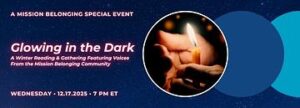 So, I’ve been thinking about how art saves lives. Especially for the core population of the Mission Belonging community: “service members, veterans, military family members, caregivers, and healthcare workers who have been gifted opportunities to use the arts as a tool for narration, self-care and socialization to offset their struggles with emotional and physical injuries caused by trauma.”
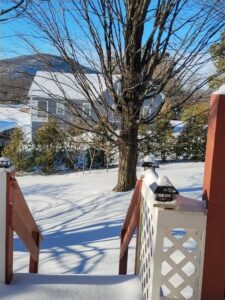
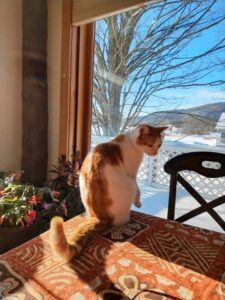
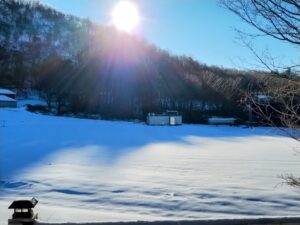 There is absolutely no landscape I like better than a snowy vista sparkling in the sun, whether I’m cozy and warm and looking out the window (as I am now) or skiing, walking or snowshoeing through winding trails with heavy snow-coated conifers, or even when I’m shoveling the driveway–as I was earlier this morning, enjoying the workout even as my partner and i struggled with our (temporarily) compromised respiratory systems to lift the heavy snow.