https://commons.wikimedia.org/wiki/ File:Rose_Papa_Meilland.jpg
Thirty-four years ago, on Rosh Hashanah, I stood on the banks of the Connecticut River and ceremoniously, with the help of my chavurah, changed my name to Dina, a name I have now had for nearly half my life.
I’d been playing with the name change for about a year. My birth name, Deborah, never felt like it fit me. In fact, the only people who ever called me Deborah were my mother when she was angry at me, and a third grade teacher I didn’t like. Debbie, the diminutive I did identify with, was beginning to feel more and more childish, but shortening it to the more adult, “Deb” always felt like something was cut off, or like the name of a sports jock, not a poet.
Another reason I made the switch: there were so many Debbies in my life, I felt boxed in by the herd. Two of my close friends growing up were also named Debbie. And I can’t even count the number of times, I’d call a schoolmate. This is Debbie, I would say. And they would say, Which one? Which made me feel so anonymous and inconsequential. To make things even worse, there was an up and coming folksinger named Debbie Friedman, and a few people thought it was me. I didn’t know you sang, they said. Since one of my secret ambitions had always been to be a folksinger, I was miffed that this other Debbie Friedman had made the cut when I hadn’t.
So it was definitely time to break out of the box and become my own person.
I chose Dina because I wanted to stick with a D-name that sounded Jewish and was easy to pronounce. I also wanted it to be different, but not too different–just a little off the beaten track. While transitioning into the change I wrote my name as Debbie Dina Friedman, which I then changed to D. Dina Friedman on the official state documents a few months after that Rosh Hashanah ritual, paying the 60 bucks and being officially done with my birth name.
If I could do it again, I’d dump the initial D in front. I still like it, but it creates a lot of unnecessary bureaucratic hassles, similar to those my partner and I saddled our kids with when we gave them a double unhyphenated last name. But other than that, I’ve been very happy with the name change, which helped me open to seeing myself in a new way. And I was grateful to the many family members and friends who gracefully transitioned to calling me by the name I wished to call myself.
My parents, however, were hurt by my rejection of the name they chose for me, and continued to call me by my birth name. Being a parent myself, I understood their unhappiness, but ultimately, this should be just one more step in parenting’s continuous process of letting go. My father, to his credit, would call me Dina when my mother wasn’t listening, but I could tell he struggled to do it. My mother, to her credit, addresses envelopes to Dina (or usually just D.–I guess that was the reason I kept the D. before Dina) but still continues to call me by my birth name.
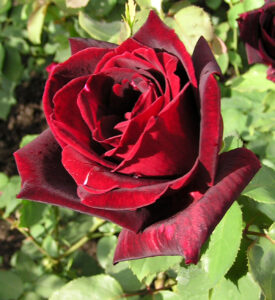
As my family sat around the table this Rosh Hashanah, our conversation suddenly turned to road apps–how to find a decent one that did not succumb to the arbitrary renaming of Lake Ontario. While I do believe, as Shakespeare said, that a rose by any other name would smell as sweet and that we have the absolute right to change our own names, we do not have the right to unilaterally change the names of things around us, especially when there are others involved with equal stakes in the outcome.
Fantasizing is fun when you’re three or four. My grandson erupts into laughter if all of a sudden he’s Grandma and I’m Manu, or if both of our names are Poop and his preschool teacher is Miss Poopy. But at some point, we need to grow up and face the fact that renaming a body of water, or plastering your own name on an arts center dedicated as a memorial to a much better person than you does not change the hard reality of who you are. Even when I became Dina, I didn’t magically morph into the wiser, cooler me I might have wished to become. (And I didn’t become a folksinger, either.) I was still me with all my quirks and flaws, though perhaps with a little less self-limiting baggage, and a clearer vision of who I could be if I worked for it. But that’s the operating word: working for it.
Subscribe at https://ddinafriedman.substack.com