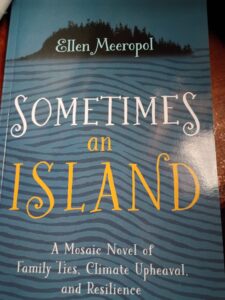
 A couple of nights ago, I went to see my friend Ellen Meeropol read from her new book, Sometimes an Island, a novel about human resilience and connection after a climate catastrophe. One of the questions she was asked packed a punch for me–and I believe it also resonated for many others in the room. How Do You Keep Writing in Hard Times?
While the audience did contain a large number of people who identified as writers, activists, or both, I think the question is universal. How do any of us do anything in hard times? How do we get out of bed in the morning? How do we engage in the regular routines of the day without falling into mental pits of excessive worry and paralysis? Is it truly enough to follow the clichéd but still useful advice of embracing gratitude, staying in the moment, and appreciating the small joys? And if we find a way of staying on the gratitude/small joys path, how do we balance our own mental health with confronting the monsters of climate change, war, racism, and countless other forms of injustice, so they don’t grow even bigger?
When Elli opened this question to other people in the room, I said, I can’t not write in hard times, because writing is my way of processing the hard stuff. And I think this is true for other creative beings (musicians, visual artists, etc.) whether or not you directly engage with political issues in your artistic life. Writing a poem, even a poem I won’t do anything with, can help me deal with paralyzing feelings. And when I’ve produced a piece of writing that feels more polished and finished, the process of creating and sharing that with others enhances my sensitivity, and hopefully provides readers a window in which to reconsider the view of their previous perceptions and gain new insights.
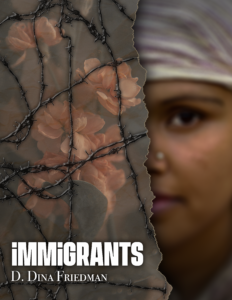
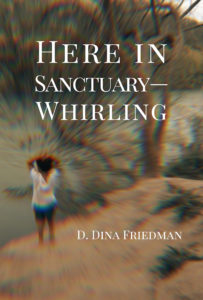
Elli also said that she doesn’t set out to provide answers in her writing, only to explore questions. I think this is an important direction and distinction for writers and other creative artists. After keeping my writing mostly separate from my politics because everything I tried to write sounded fake and didactic, I realized that I needed to center on the nuance, not the solution. When I finally put together my immigration-justice themed short story collection Immigrants, and my chapbook of poems, Here in Sanctuary–Whirling in a sense, all I was doing was whirling around my own questions. I had no answers (and no evidence that any so-called “answer” I came up with would be the right answer). I only wanted to expose what had been ignored by a harsh rationalistic rhetoric that focuses on question/answer, right/wrong and completely ignores its potential impact on human beings.
I haven’t yet read Elli’s newest book, but based on what I heard from her reading and how much I enjoyed her previous novels, I can happily recommend it. And even if it doesn’t solve these bigger questions, I’m sure it will help me think more deeply about them.
Subscribe at http://ddinafriedman.substack.com